 Acceso sin colas disponible
 Historia y Leyendas del Palácio Nacional de Sintra
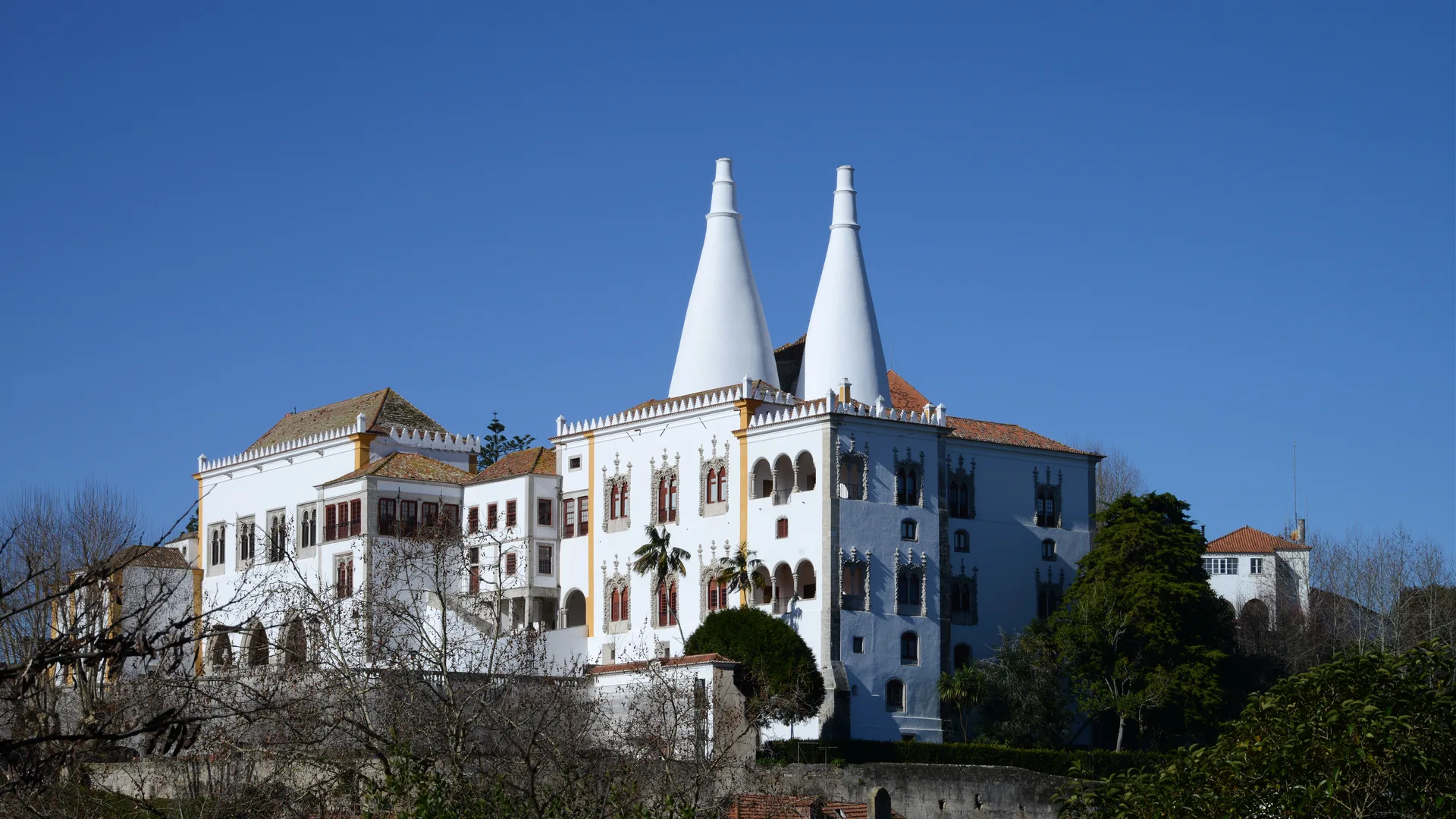
El Palácio Nacional de Sintra es la residencia real de mayor ocupación continuada en la historia portuguesa, una conversación arquitectónica que comenzó en la época andalusí y prosiguió a través de todas las grandes dinastías portuguesas hasta la caída de la monarquía en 1910. Sus muros conservan evidencias estratificadas de la primera gran remodelación del rey Alfonso IV a finales del siglo XIII, la ampliación del rey Juan I a finales del siglo XIV (y la célebre leyenda de las urracas Por Bem vinculada a su matrimonio con Felipa de Lancaster), las adiciones del rey Juan II en la década de 1490, la gran reinterpretación manuelina-mudéjar bajo el rey Manuel I, y una restauración romántica decimonónica bajo Fernando II, el mismo monarca que edificó el Palacio de Pena en la colina superior. Esta guía de servicio exclusivo recorre la historia del palacio de forma cronológica para después adentrarse en sus leyendas más perdurables, incluido el lema Por Bem de las urracas, ayudándole a interpretar los múltiples estratos del edificio como documento vivo de la monarquía portuguesa.
Orígenes andalusíes y la remodelación de Alfonso IV en el siglo XIII
El emplazamiento del Palácio Nacional de Sintra estuvo ocupado como residencia durante el dominio andalusí de la península ibérica, y elementos de aquella ocupación primigenia —particularmente en las tradiciones de azulejería geométrica y ciertos fragmentos murales— se preservaron en las fases portuguesas posteriores del edificio. Tras la reconquista cristiana de Sintra en el siglo XII, el emplazamiento pasó a la corona portuguesa, y la primera inversión real sostenida llegó bajo el rey Alfonso IV en la segunda mitad del siglo XIII, quien inició una importante remodelación hacia la década de 1280 para adaptar el edificio como residencia real portuguesa.
La estratificación de las fases andalusí y medieval portuguesa temprana resulta aún legible en las galerías de azulejería hispanomorisca que perviven entrelazadas entre los salones de Estado posteriores, y es precisamente esta superposición —la tradición ornamental del islam ibérico absorbida por una casa real cristiana— la que confiere al Palácio Nacional de Sintra su carácter arquitectónico distintivo. El edificio se erige en uno de los puntos de encuentro más nítidos de Europa entre al-Ándalus y la arquitectura real medieval cristiana, y aprender a leer esos dos lenguajes en muros contiguos es el ejercicio de atención más gratificante que puede practicar el visitante observador en el interior del palacio.
El rey Juan I, Felipa de Lancaster y los techos pintados
Finales del siglo XIV trajeron al palacio su primera gran edad de ambición artística, bajo el rey Juan I (reinado 1385–1433) y su esposa de origen inglés Felipa de Lancaster, con quien contrajo matrimonio en 1387. Tanto la Sala de los Cisnes como la Sala de las Urracas datan en su forma de techos pintados de este periodo y se vinculan tradicionalmente con la pareja real: los cisnes asociados al linaje inglés de Felipa, las urracas a la célebre leyenda Por Bem que tratamos más adelante. Los techos pintados de este periodo figuran entre las obras más destacadas del arte decorativo portugués bajomedieval que han llegado hasta nuestros días, habiendo sobrevivido prácticamente intactos a las fases de restauración posteriores.
Juan I y Felipa criaron en Sintra lo que la historiografía portuguesa posterior llamó la Ínclita Geração, la generación ilustre que incluyó al infante Enrique el Navegante, y el palacio sirvió como residencia familiar principal durante su largo y transformador reinado. El reinado coincidió con los primeros cimientos de la Era de los Descubrimientos portuguesa, y el palacio funcionó como escenario político activo además de residencia real doméstica. La Sala de los Cisnes desempeñó la función de salón de Estado principal para recepciones y banquetes durante todo este periodo, y el lenguaje arquitectónico de su techo pintado invocaba deliberadamente simbolismo dinástico y caballeresco propio de una corte que se posicionaba en un nuevo escenario europeo.
Expansión manuelina bajo Juan II y Manuel I
La segunda gran edad arquitectónica del palacio llegó en el cambio de siglo al XVI. El rey Juan II supervisó una importante ampliación en 1495 que añadió nuevas alas y mejoró la circulación del edificio, y el reinado siguiente del rey Manuel I (1495–1521) —el monarca que da nombre al estilo arquitectónico manuelino— trajo consigo la fase decorativa más ambiciosa del palacio, incluyendo la Sala de los Escudos con sus 71 blasones nobiliarios bajo las armas reales centrales, y una sustancial azulejería manuelina-mudéjar que refleja la riqueza de la Era de los Descubrimientos portuguesa y su confianza cultural expansiva.
El estilo manuelino fusiona el lenguaje estructural tardogótico con motivos decorativos marítimos y orientales, y el Palácio Nacional de Sintra es uno de los lugares más elocuentes del país para interpretarlo en un interior real habitado y no en una iglesia o monasterio. Las residencias reales de Tomar, Belém y Sintra conforman conjuntamente el registro arquitectónico más coherente del momento manuelino en la historia cultural portuguesa. En Sintra específicamente, el contraste entre los techos pintados más antiguos del periodo de Juan I y las afirmaciones heráldico-manuelinas de Manuel I convierte al palacio en una lección singularmente concentrada sobre cómo una casa real activa absorbe las ambiciones de soberanos sucesivos.
Restauración del siglo XIX y la leyenda de Por Bem
A principios del siglo XIX, el palacio había atravesado períodos de abandono y deterioro parcial, incluidos los efectos del gran terremoto de Lisboa de 1755 y la inestabilidad política que siguió a las Guerras Liberales. La recuperación romántica llegó bajo el reinado de Fernando II, el mismo monarca que, en la colina sobre Sintra, construía simultáneamente el Palacio de Pena a partir de las ruinas de un monasterio jerónimo, convirtiéndolo en el gran manifiesto del Romanticismo portugués. El interés de Fernando por la restauración se extendió al Palacio Nacional en el pueblo, donde las obras de conservación a lo largo del siglo XIX estabilizaron el edificio, preservaron los techos pintados y consolidaron las galerías de azulejería hispano-árabe. Tras la proclamación de la República Portuguesa en 1910, el palacio pasó a ser de titularidad pública; actualmente está gestionado por Parques de Sintra-Monte da Lua (PSML) como Monumento Nacional y elemento integrante del Paisaje Cultural de Sintra, inscrito por la UNESCO en 1995.
La leyenda más célebre del palacio pervive en la Sala de las Urracas, cuyo techo está decorado con urracas que portan cada una un pequeño estandarte con la inscripción Por Bem —para bien, o con buena intención—. La tradición cuenta que el rey Juan I fue sorprendido por la reina Felipa de Lancaster besando a una dama de la corte; la respuesta de la reina fue simplemente Por Bem, sugiriendo que el beso había sido inocente; y el rey, entre avergonzado e irritado por las murmuraciones de las damas de la corte que habían divulgado el asunto, encargó un techo pintado con tantas urracas como mujeres chismosas había, cada una sosteniendo la diplomática frase de la reina. Que la leyenda sea historia literal o una tradición cortesana posterior importa menos que su pervivencia: el lema Por Bem sigue visible en el techo 600 años después, y la estancia se presenta como uno de los espacios más encantadores y humanos de la arquitectura real europea: una broma arquitectónica que ha sobrevivido a todas las disputas que narró.
Preguntas frecuentes
¿Qué antigüedad tiene el Palacio Nacional de Sintra?
El emplazamiento estuvo ocupado durante el dominio musulmán antes del siglo XII y fue significativamente remodelado como residencia real portuguesa desde finales del siglo XIII bajo el reinado de Alfonso IV.
¿Por qué se considera la residencia real más longeva de la historia portuguesa?
Funcionó como residencia real activa de forma ininterrumpida desde el período medieval hasta la caída de la monarquía en 1910, una ocupación más prolongada que la de cualquier otro palacio portugués.
¿Qué es la leyenda de Por Bem?
Es la tradición que narra cómo el rey Juan I encargó el techo pintado de la Sala de las Urracas —urracas portando cada una un estandarte con la inscripción Por Bem— después de que la reina Felipa de Lancaster empleara esa frase en respuesta a un incidente de un beso cortesano.
¿Quién pintó el techo de la Sala de los Cisnes?
No existe documentación fehaciente del artista, pero el techo pintado data de finales del siglo XIV y se asocia tradicionalmente con el enlace matrimonial del Rey João I con Philippa de Lancaster.
¿Qué es la arquitectura manuelina?
Un estilo gótico tardío portugués que debe su nombre al Rey Manuel I (reinado 1495–1521), fusionando el lenguaje estructural gótico con motivos decorativos marítimos y orientales propios de la Era de los Descubrimientos.
¿El terremoto de 1755 dañó el palacio?
El gran terremoto de Lisboa causó daños en toda la región, y el palacio atravesó posteriores períodos de restauración para recuperarse del desgaste acumulado, con importantes trabajos de conservación durante el siglo XIX bajo el reinado del Rey Fernando II.
¿Quién es el propietario actual del palacio?
Es un Monumento Nacional portugués gestionado por Parques de Sintra-Monte da Lua (PSML), y constituye un elemento del Paisaje Cultural de Sintra declarado por la UNESCO.
¿Cuándo fue inscrita Sintra por la UNESCO?
El Paisaje Cultural de Sintra fue inscrito en la lista del Patrimonio Mundial de la UNESCO en 1995.
¿Residió allí el Rey Fernando II?
Fernando II es célebre por la construcción del Palacio de Pena en la colina sobre Sintra, pero su programa de conservación también abarcó el Palacio Nacional del pueblo durante el siglo XIX.